
The Thylacine: did the Tasmanian tiger survive?
The extinct animal Australia still refuses to give up
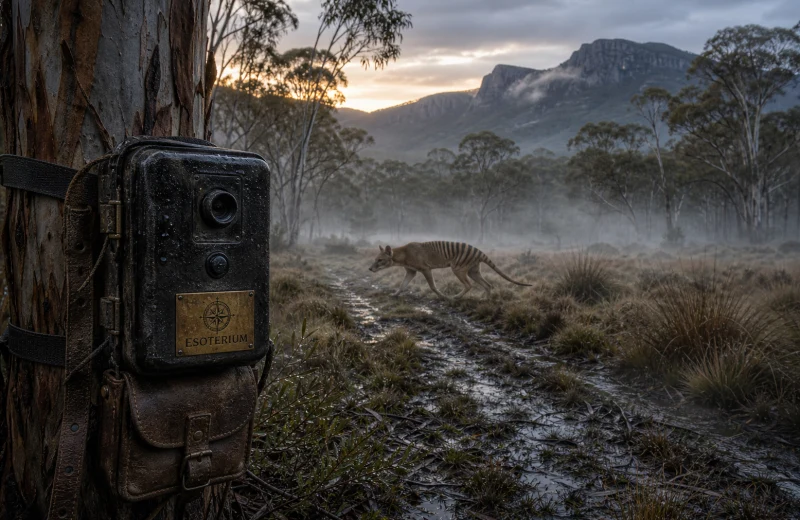
| Also known as | Tasmanian tiger, Tasmanian wolf, thylacine |
|---|---|
| Region | Tasmania; disputed reports from mainland Australia |
| First sighting | Historical species; declared extinct in 1986 |
| Type of creature | Extinct animal / possible survivor |
| Danger level | ☾☾☾☾☾ |
The last known animal
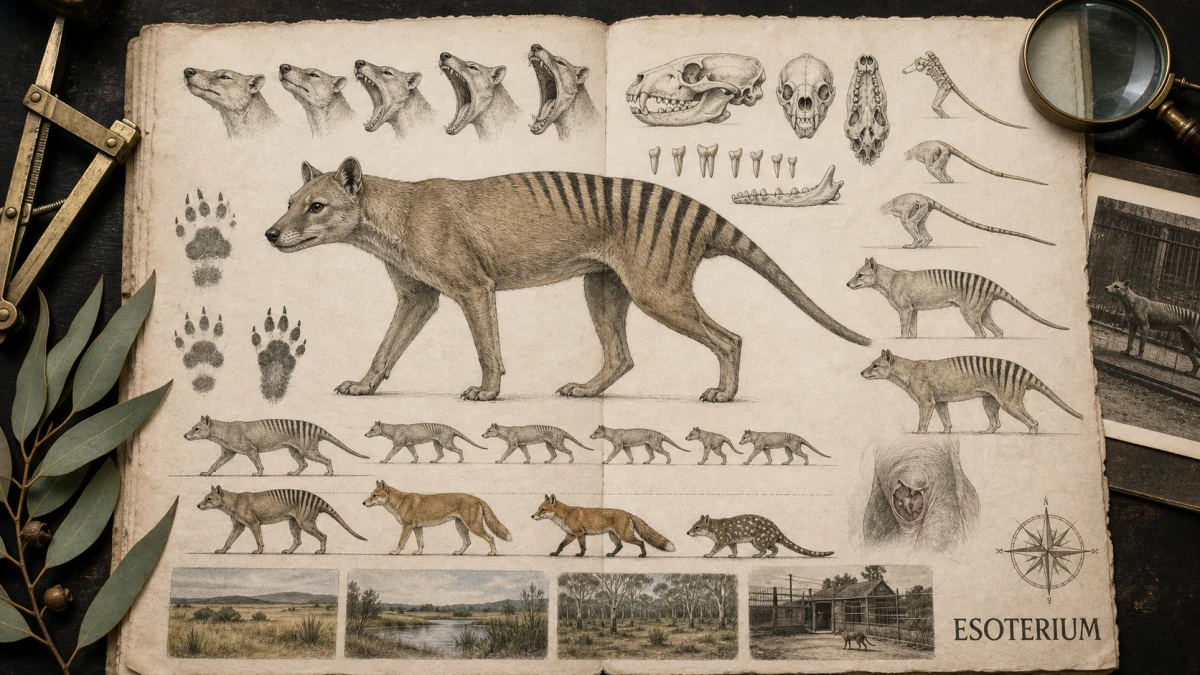
The thylacine was not born from rumour. It was the largest carnivorous marsupial of modern times, with a dog-like body, rigid tail, unusually wide-opening jaws and dark stripes across its rump. Livestock persecution, bounties, habitat loss and possibly disease reduced its population. The last confirmed animal died at Hobart Zoo on 7 September 1936, only months after Tasmania granted the species legal protection.

Sightings after extinction
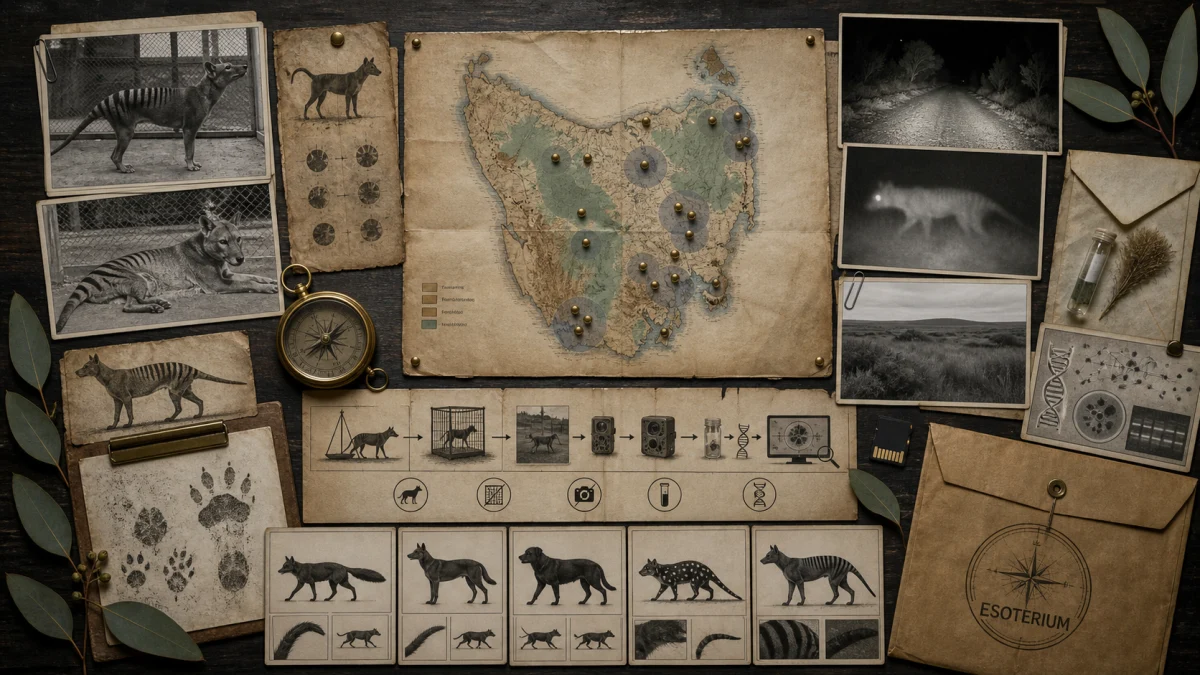
Hundreds of reports have accumulated since 1936. Some came from rangers and observers familiar with local wildlife; others were night-time glimpses too brief to rule out dogs, foxes or quolls. Camera-trap surveys and field expeditions have produced no unambiguous photograph, body, genetic sample or reproducible population. The useful question is not whether every witness lies, but whether any account survives the problem of identification at a distance.
From searching to de-extinction
The lack of recent evidence makes survival increasingly unlikely, yet the thylacine has gained a second scientific life. University teams are studying its genome, marsupial cells and reproductive methods in the hope of creating a functionally similar animal. The work may yield tools to conserve living marsupials, although rebuilding genes cannot recover the lost animal’s behaviour, ecosystem or history.