
The Jackalope
The antlered hare that turned Wyoming’s plains into a legend
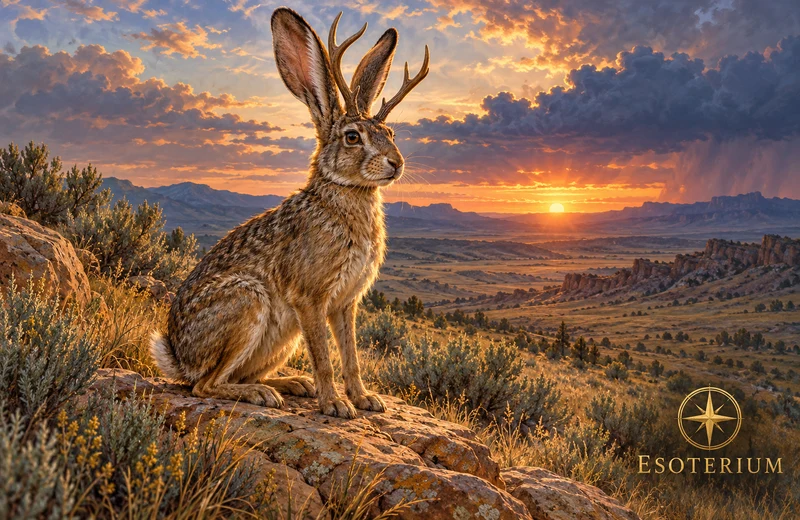
| Also known as | Antlered hare, horned rabbit |
|---|---|
| Region | Douglas, Wyoming, and the Great Plains of the United States |
| First sighting | Popularised in Douglas during the 1930s |
| Type of creature | Folkloric mammal / legendary hybrid |
| Danger level | ☾☾☾☾☾ |
A voice beside the campfire
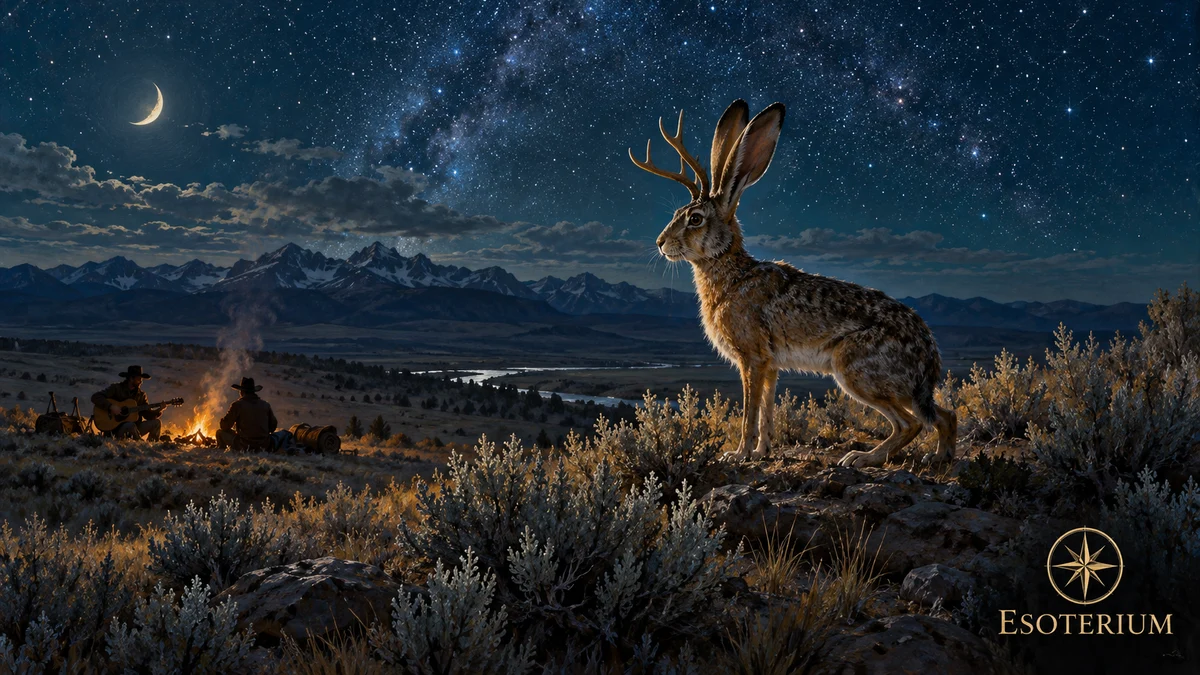
Imagine a night on the plains: cowboys finish a song and a voice answers from the darkness. It belongs not to another traveller, but to a long-eared hare with antlers on its head. A Jackalope tale might begin this way, with wonder and mischief sharing a place beside the fire.
The City of Douglas account describes its supposed ability to imitate human voices and misdirect anyone searching for it. It also credits the creature with extraordinary speed and breeding linked to lightning flashes. This is folklore told with humour, rather than zoological description: exaggeration is part of the character.

The Herrick brothers’ workshop
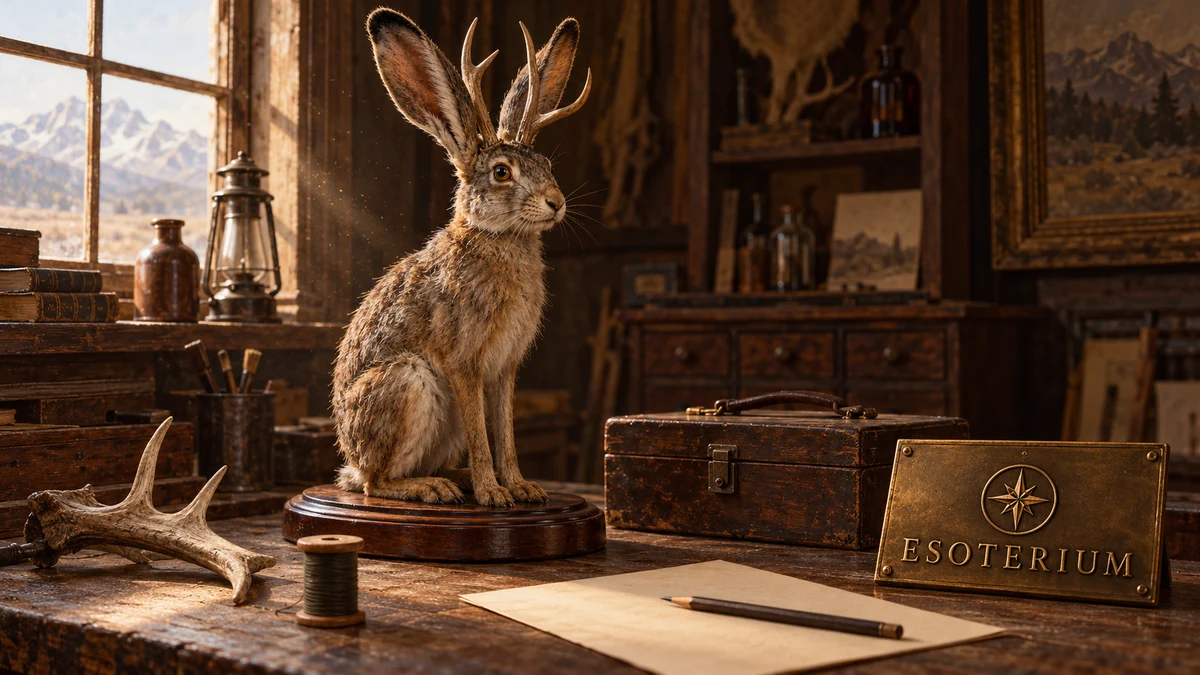
The documented part of its story leads to Douglas, Wyoming. The University of Wyoming’s American Heritage Center places Doug and Ralph Herrick’s creations in the 1930s: the brothers combined a taxidermy jackrabbit with deer antlers and sold it to a local hotel. They later supplied other retailers.
The object gave the story something to show. A visitor received more than a tale: there was an apparently complete creature to inspect. Yet a taxidermy construction demonstrates its maker’s skill, not the existence of a hybrid animal. That distinction allows us to appreciate the piece without mistaking it for a discovery.
Rabbits that seem to have horns
A real phenomenon can resemble the legend. Colorado Parks and Wildlife explains that cottontail rabbit papillomavirus causes skin growths, usually on the head, which sometimes become elongated and horn-like. These are lesions, not branching deer antlers.
That resemblance offers a possible explanation for some pictures of unusual rabbits. It does not establish that every tale began with this phenomenon, nor does it turn an affected rabbit into a Jackalope. Three things deserve to be kept distinct: real animals, manufactured objects and the creature of the stories.
A legend that can laugh at itself
Wyoming’s archive preserves souvenirs that reveal the joke: humorous permits to search for Jackalopes on June 31, a date that does not exist. Anyone checking the calendar can spot the trick. Rather than concealing a species, these objects invite visitors to take part in the tale.
Its place in the bestiary comes from that blend of imagination, landscape and craftsmanship. The single danger moon reflects the tone of the stories, not a demonstrated risk. All three illustrations are artistic reconstructions; the workshop scene reproduces neither a historical photograph nor a verified biological specimen.