
The Beast of Bray Road
The wolf-like figure that stood beside Wisconsin’s roads
| Also known as | Bray Road Beast, Wisconsin Werewolf |
|---|---|
| Region | Elkhorn and Walworth County, Wisconsin, USA |
| First sighting | Accounts from 1989–1991; published in December 1991 |
| Type of creature | Canine humanoid / contemporary legend |
| Danger level | ☾☾☾☾☾ |
A silhouette on the roadside
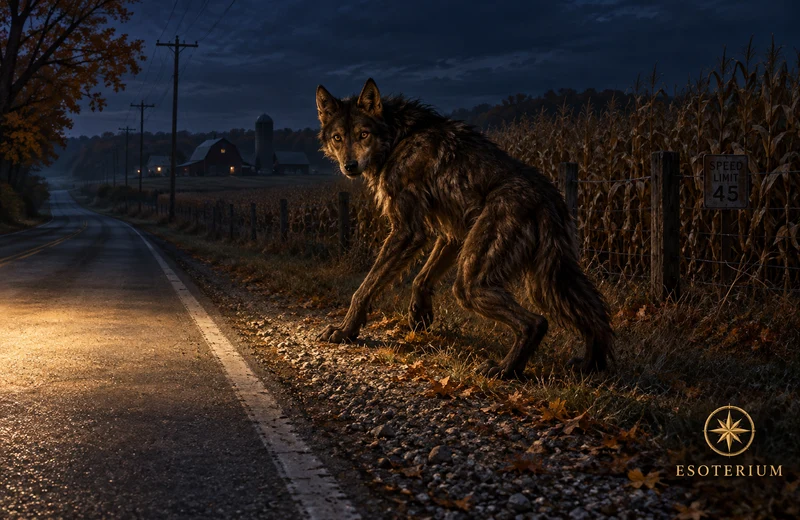
A country road, cornfields and headlights catching something too large to look like a dog. That is the setting of the Beast of Bray Road accounts Linda Godfrey collected near Elkhorn. Her December 29, 1991 report described encounters with a hairy figure with a long muzzle and pointed ears, seen upright or crouching beside the road.
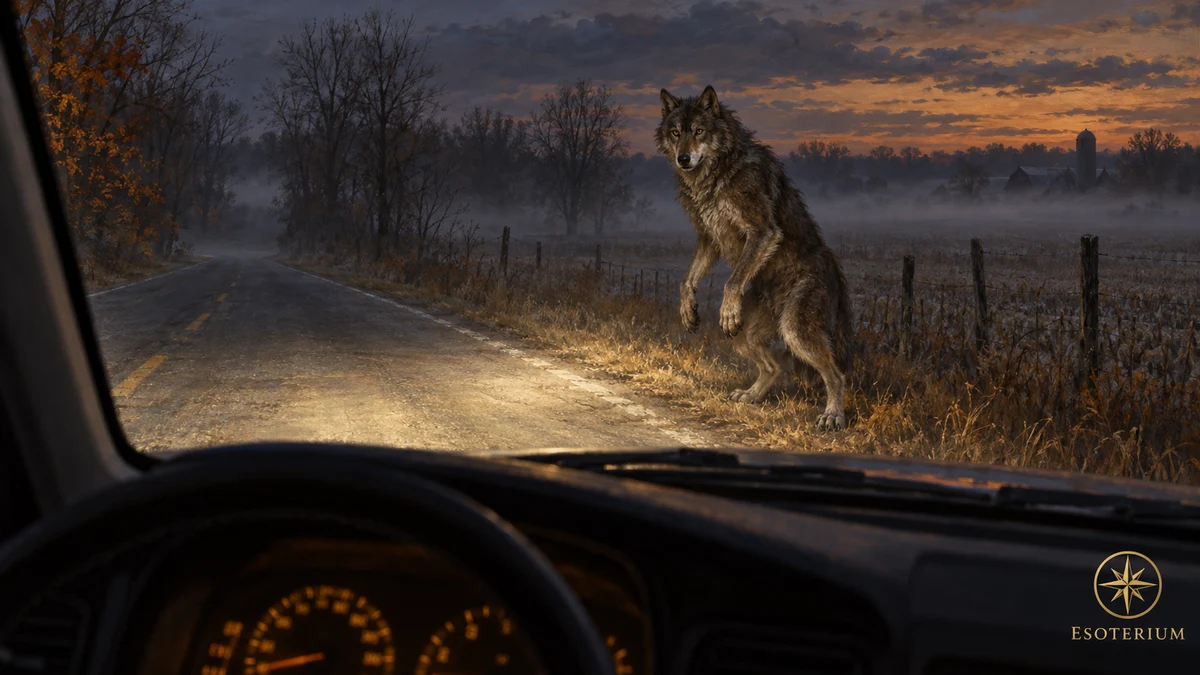
One woman, given the pseudonym Barbara, placed her sighting about two years earlier and described the animal feeding on the roadside. Another, introduced as Pat, said a creature ran towards her car on Halloween in 1991. These are statements collected by a journalist, not attacks confirmed through independent evidence.

How the Beast’s case took shape
In her own account of the case, Godfrey explains that she named the creature after the road associated with the first public reports. More stories arrived after publication, including alleged encounters from earlier years. The image of a large canine able to stand upright spread through books and mystery programmes.
The 1936 date found in many versions needs context: it refers to a story from Jefferson added decades later, rather than a contemporary report from Bray Road. Folklore researcher Willem de Blécourt highlights this gap in Wisconsin Werewolves. Distinguishing the claimed encounter date from the date it was recounted keeps a later memory from becoming a contemporary record.
A familiar animal in misleading light?
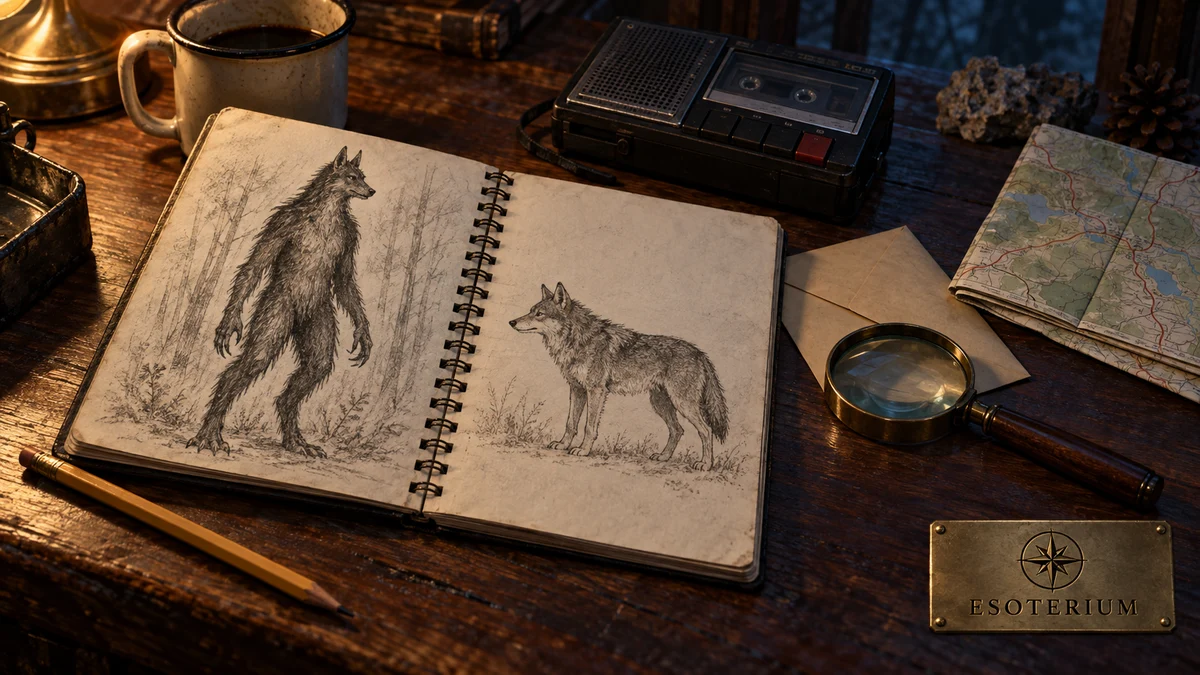
The original report already offered an ordinary explanation. Local humane officer Jon Fredrickson suggested a coyote or wolf: a leap or momentary posture could create the impression of walking on two legs. That hypothesis did not identify a particular animal or account for every description.
Distance, vegetation and a brief glimpse make proportions and movement difficult to reconstruct. A sincere account can contain mistakes. Equally, a resemblance to a known animal does not establish what each person saw. The case provides no verified physical evidence establishing a new species.
Werewolves, Dogmen and roadside legends
Despite its Wisconsin Werewolf nickname, the main accounts do not describe a human transforming into an animal. Godfrey did not necessarily consider it a traditional werewolf either. Its visual similarity to other Dogman stories helps explain how different accounts become grouped around one figure.
Bray Road’s power lies in a small scene: a familiar road and something that becomes unfamiliar for a few seconds. The three danger moons reflect reported chases, not a demonstrated zoological risk. This page’s illustrations are artistic reconstructions, not photographs, original witness sketches or documents from the case.